 By muhammadusmanali5080
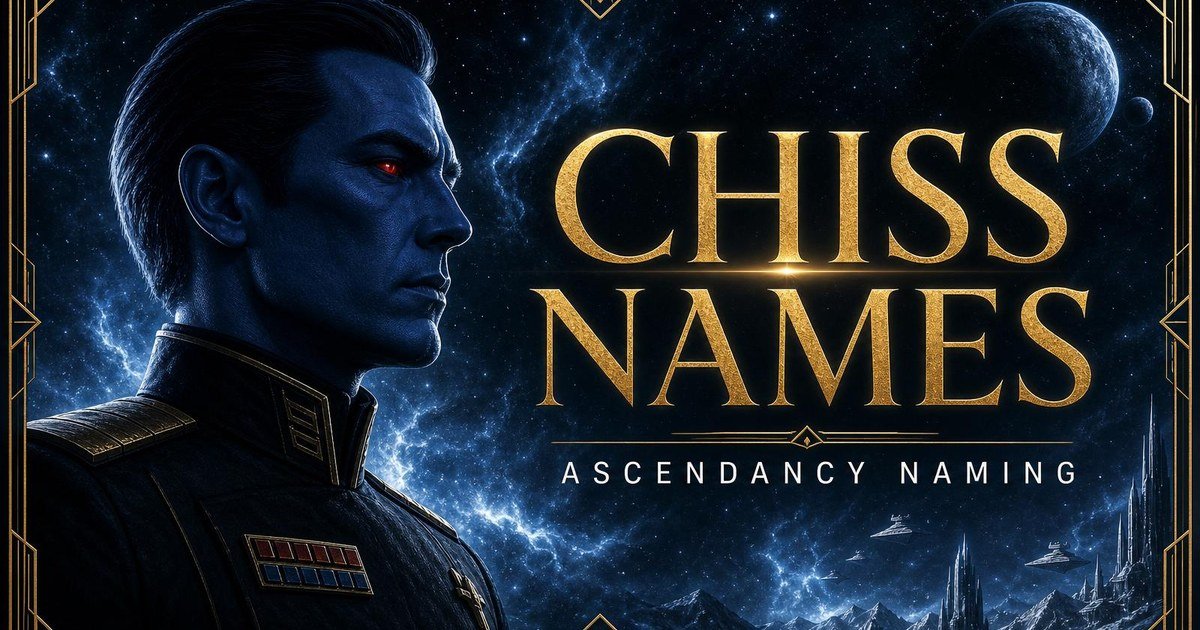
Chiss names are among the most sophisticated in all of Star Wars — a three-part structure of family prefix, core name, and house suffix that tells you exactly who someone is before they speak a word. Made famous by the legendary tactician Grand Admiral Thrawn, the Chiss naming system reflects a civilization of blue-skinned, red-eyed humanoids built around ruling families, military hierarchy, and ancient tradition deep in the Unknown Regions.
Whether you need a Chiss name generator for SWTOR, want to understand Chiss naming conventions in full, are looking for female Chiss names for an Ascendancy character, or are crafting an original Chiss tactician for tabletop roleplay, this guide covers every aspect of the Chiss name structure — from the Nine Ruling Families and the Navigator tradition to SWTOR Chiss names and lore-accurate RPG character names. Pair it with our Star Wars Name Generator for instant Chiss results.
Understanding Chiss Name Structure
Unlike most Star Wars species that use simple given name and surname combinations, Chiss names follow a sophisticated three-part structure that reveals important information about an individual’s identity, family connections, and social standing within the Chiss Ascendancy.
The Three Components of a Chiss Name
Every full Chiss name consists of three distinct elements combined into a single flowing name:
- Family/House Name Prefix – Indicates the ruling family or house affiliation
- Core Name – The individual’s personal identifier, used in informal settings
- Family/House Name Suffix – Completes the family designation and often indicates lineage branch
This creates the distinctive pattern: [House Prefix]'[Core Name]'[House Suffix]
Thrawn’s Name: The Perfect Example
To truly understand Chiss naming conventions, let’s examine the most famous Chiss in Star Wars history—Grand Admiral Thrawn. His full ceremonial name demonstrates every aspect of Chiss nomenclature:
Breaking Down Mitth’raw’nuruodo
| Component | Element | Meaning |
|---|---|---|
| House Prefix | Mitth | One of the Nine Ruling Families of the Chiss Ascendancy |
| Core Name | raw | His personal identifier, shortened to “Thrawn” for outsiders |
| House Suffix | nuruodo | Indicates his specific lineage within the Mitth family |
The name “Thrawn” that we commonly use is actually a core name derivative—a simplified version created for non-Chiss who struggle with the full ceremonial pronunciation. This practice is common when Chiss interact with outsiders.
Other Canon Chiss Name Examples
Thrawn is not the only Chiss whose name follows this pattern. Here are additional examples from canon and legends:
- Ar’alani – Admiral in the Chiss Expansionary Defense Fleet (core name from a longer form)
- Eli’van’to – Eli Vanto, a human who received an honorary Chiss name
- Irizi’ar’alani – Ar’alani’s full name, showing her Irizi family affiliation
- Mitth’ras’safis – Thrass, Thrawn’s brother (adoptive), also of the Mitth family
- Kivu’raw’nuru – A Chiss warrior from the Kivu family
The Nine Ruling Families
The Chiss Ascendancy is governed by Nine Ruling Families, each with distinct naming prefixes. When creating Chiss names, selecting an appropriate family adds authenticity and depth to your character:
Major Ruling Families
- Mitth – One of the most prominent families; Thrawn’s house
- Irizi – Military-focused family with strong fleet traditions
- Csapla – Powerful family involved in governance
- Nuruodo – Ancient family with political influence
- Sabosen – Family with diplomatic traditions
- Ufsa – Lesser-known but established ruling family
- Boadil – Family with territorial holdings
- Clarr – Ruling family with commercial interests
- Plikh – Family with scholarly pursuits
Characters can also belong to lesser families, which typically have shorter or different prefix patterns than the ruling families.
Formal vs. Informal Chiss Names
Chiss society observes strict protocols regarding when different name forms are appropriate. Understanding these distinctions is crucial for authentic character creation.
Full Ceremonial Name
The complete three-part name (like Mitth’raw’nuruodo) is used in:
- Official government and military ceremonies
- Formal introductions to high-ranking officials
- Legal and diplomatic documents
- Ancestral records and family registries
Core Name Usage
The core name alone (like “raw” or the derived “Thrawn”) is used:
- Among close friends and family
- In casual military settings among peers
- When interacting with non-Chiss who cannot pronounce full names
- In informal social gatherings
Translated/Simplified Names
When Chiss work extensively with outsiders, they often adopt translated names derived from their core name. “Thrawn” is a perfect example—it’s an approximation of “raw” that Basic speakers can easily pronounce. This practice allows Chiss to maintain their identity while facilitating communication.
How Do Chiss Names Work? A Complete Explanation
Chiss names work as three-part ceremonial identifiers built on the pattern [House Prefix]'[Core Name]'[House Suffix], where each component reveals family allegiance, personal identity, and lineage branch within the Chiss Ascendancy. This is the heart of Chiss name structure, and understanding it answers most of the common Chiss naming conventions questions in one go.
The Apostrophe System Explained
Apostrophes appear in Chiss names because they act as visual separators between the three components — they tell the reader where the family prefix ends, where the personal core name sits, and where the lineage suffix begins. Some simplified Chiss names lack apostrophes entirely; this happens during informal interactions with outsiders, in military shorthand among non-Chiss allies, and in any context where pronunciation is prioritized over ceremony. On first encounter, you can read any Chiss name by mentally splitting it on the apostrophes: prefix → core → suffix.
The Core Name Extraction Process
Outsiders derive short forms by extracting the core consonants and reshaping them for pronounceability — what fans call the “Thrawn rule.” Worked examples:
- Mitth’raw‘nuruodo → raw → Thrawn (Th from Mitth + raw, smoothed)
- Irizi’ar’alani → ar’al → Ar’alani
- Mitth’ras‘safis → ras → Thrass
- Eli’van‘to → van → Vanto
- Csapla’vor‘intis → vor → Vorint
- Irizi’kas‘nodo → kas → Ikasn
- Nuruodo’fel‘astor → fel → Felas
- Sabosen’thal‘orix → thal → Thalo
- Mitth’orn‘kelad → orn → Thornkel
- Irizi’ven‘alari → ven → Venal
Family Status and Name Changes
Chiss family membership comes in two flavors: Trial-born (provisional, merit-based) and blood (born into the family). Adoption into a higher family changes the name prefix entirely. Thrawn’s complicated status is the textbook case — he was a Trial-born Mitth, elevated through merit, and later “demoted” when stripped of family standing, briefly bearing the rankless designation Vurawn. A Chiss stripped of family entirely loses the prefix altogether.
The Merit Adoption System
Exceptional Chiss can be adopted into ruling families as adults, which rewrites the prefix and suffix of their full name while preserving the core. Five example scenarios:
- Lesser-family Kivu’raw’nuru elevated by Mitth → Mitth’raw’nuruodo
- Trial-born Mitth’orn’kelad blood-confirmed → Mitth’orn’kelado
- Csapla’vor’intis adopted by Irizi for fleet service → Irizi’vor’intaro
- Stybla scientist adopted by Sabosen for diplomacy → Sabosen’sty’velax
- A demoted Mitth officer reverting to a lesser family → Kivu’raw’nu
Female Chiss Names: The Women of the Ascendancy
Female Chiss names follow the same three-part ceremonial structure as male names but lean on flowing, vowel-rich cores and softer consonants — and women hold equal status across the Chiss Ascendancy, especially in fleet command, governance, and the unique Navigator tradition. If you searched for female Chiss names, chiss female names, or star wars chiss female names, this section is the dedicated reference.
Female Chiss in the Ascendancy
- Women serve at the highest ranks of the Expansionary Defense Fleet — Admiral Irizi’ar’alani (Ar’alani) is the most prominent female Chiss in canon and a peer to Thrawn himself.
- Female Navigators — known as ozyly-esehembo, “sky-walkers” — are young Force-sensitive girls whose abilities allow Chiss ships to traverse the Chaos. Their names follow a softer, more lyrical convention than typical adult Chiss names.
- Female members of ruling families carry the same prestige and political weight as male members; the prefix and suffix mechanics are identical.
Phonetic Patterns for Female Chiss Names
- Cores: flowing, vowel-rich; soft consonants (l, n, v, r, s) dominate.
- Common female core sounds: -ali, -ani, -ala, -iri, -ena, -ova, -ela.
- Suffixes: often end on open vowels — -alani, -neria, -istae, -aneth, -vala.
- Contrast with male: male cores are harder (-raw, -kas, -vor, -sar); female cores are softer and more sustained.
Canon Female Chiss Names Fully Analyzed
- Irizi’ar’alani (Ar’alani) — House Irizi, core “ar’al,” suffix “alani”; the repeated ‘a’ creates a flowing, authoritative cadence fitting an admiral.
- Mitth’ali’nera (Talin) — House Mitth, core “ali,” soft sustained vowels.
- Sabosen’iri’vala (Siriv) — House Sabosen, diplomatic family, gentle cores ideal for envoys.
- Csapla’ven’iri (Venir) — House Csapla, governance lineage, short crisp core balanced by lyrical suffix.
- Nuruodo’syl’ana (Sylana) — political family, melodic core, open ending.
Female Chiss Names by Ruling Family
Mitth (military prestige): Mitth’ali’nera (Talin), Mitth’ela’noria (Thelan), Mitth’iri’vesta (Iriv), Mitth’ova’lendis (Olen), Mitth’ari’sandel (Arisan).
Irizi (fleet tradition): Irizi’ar’alani (Ar’alani), Irizi’ven’alari (Venal), Irizi’sel’vanti (Selva), Irizi’noa’lestre (Noal), Irizi’mira’venth (Miraven).
Csapla (governance): Csapla’ven’iri (Venir), Csapla’mir’istae (Mirist), Csapla’lae’noria (Laenor), Csapla’eli’vasta (Eliva), Csapla’syn’arelle (Synare).
Nuruodo (political lineage): Nuruodo’syl’ana (Sylana), Nuruodo’syl’aneth (Sylan), Nuruodo’ena’visari (Enavis), Nuruodo’ali’restan (Alirest), Nuruodo’iri’venta (Irivent).
Sabosen (diplomacy): Sabosen’iri’vala (Siriv), Sabosen’ari’velox (Arivel), Sabosen’ela’morath (Elamor), Sabosen’ova’rinis (Ovarin), Sabosen’lia’venthar (Liaven).
Ufsa (territorial): Ufsa’lin’arena (Linaren), Ufsa’mara’velis (Maravel), Ufsa’ova’sandeth (Ovasan).
Boadil (commercial): Boadil’ena’vistari (Enavis), Boadil’syl’arenth (Sylare), Boadil’ali’noria (Alinor).
Clarr (scholarly): Clarr’iri’sendar (Irisen), Clarr’ova’merath (Ovamer), Clarr’ena’vistal (Enavist).
Plikh (administrative): Plikh’ali’sandar (Alisan), Plikh’mira’venthe (Miraven), Plikh’syl’noria (Sylnor).
Female Navigator Names (ozyly-esehembo)
The Force-sensitive female Navigators are typically pre-adolescent and use a softer, more lyrical naming convention that often references stars, navigation, and currents in the Chaos. They go by short forms more often than full ceremonial names. Examples:
- Un’hee — short core form, classic Navigator brevity.
- Che’ri — flowing, dual-syllable, star-bright cadence.
- Vah’nya — adult Navigator who survived past the typical Force window.
- Thalia — light-suffix, “guiding” connotation.
- Selari — “course-keeper” cadence.
- Norina — soft, sustained.
- Ilyari — “starwake” quality.
- Verena — “silent currents” cadence.
For instant female Chiss results across all nine ruling families, run our Star Wars Name Generator with the Chiss species selected.
Male Chiss Names: Warriors and Tacticians of the Ascendancy
Male Chiss names use the same three-part ceremonial structure but favor harder consonant clusters and decisive endings — the sound of military commanders, political strategists, and family heads. Thrawn is the defining archetype, and most fans searching chiss male are looking for names that share his weight without copying his exact form.
Male Chiss in the Ascendancy
- Male Chiss dominate the visible roster of fleet captains, syndic representatives, and family patriarchs in canon, though by tradition not by exclusion.
- Male Chiss who serve alongside outsiders — Thrawn with the Empire, Eli Vanto adopted into the Ascendancy — often become the most recognizable because they bridge cultures.
- Thrawn works as an archetype because every layer of his name reinforces him: prestigious Mitth prefix, hard core “raw,” and the resonant suffix “nuruodo.”
Phonetic Patterns for Male Chiss Names
- Cores: harder consonant clusters, decisive single-syllable endings.
- Common male core sounds: -raw, -kas, -vor, -sar, -orn, -dek, -thal.
- Suffixes: harder endings — -nuruodo, -kelad, -niru, -ustis, -iklan.
- The Thrawn derivation rule: short forms keep the hard core consonants and borrow one consonant from the prefix for English pronounceability.
Canon Male Chiss Names Fully Analyzed
- Mitth’raw’nuruodo (Thrawn) — Mitth prestige, hard “raw” core, sustained suffix; the perfect Chiss male template.
- Mitth’ras’safis (Thrass) — Thrawn’s adoptive brother; same family, parallel core structure showing Mitth naming consistency.
- Kivu’raw’nuru — same core “raw” as Thrawn but different family; a reminder that core names are personal and can repeat across houses.
- Csapla’vor’intis (Vorint) — governance family; the suffix carries the bureaucratic weight typical of Csapla.
- Irizi’kas’nodo (Ikasn) — Irizi fleet family; the hard “kas” core reads as a tactician’s name.
Male Chiss Names by Ruling Family
Mitth: Mitth’raw’nuruodo (Thrawn), Mitth’ras’safis (Thrass), Mitth’orn’kelad (Thornkel), Mitth’dek’astor (Thedek), Mitth’sar’venis (Sarven).
Irizi: Irizi’kas’nodo (Ikasn), Irizi’vor’ustis (Vorus), Irizi’thal’rendis (Thalren), Irizi’orn’sastra (Ornas), Irizi’sar’velax (Sarvel).
Csapla: Csapla’vor’intis (Vorint), Csapla’dek’niru (Dekni), Csapla’kas’orodan (Kasoro), Csapla’thal’venir (Thalven), Csapla’orn’sandar (Ornsan).
Nuruodo: Nuruodo’sar’iklan (Sarik), Nuruodo’fel’astor (Felas), Nuruodo’raw’tendis (Rawten), Nuruodo’kas’velith (Kasvel), Nuruodo’orn’merath (Ornmer).
Sabosen: Sabosen’thal’orix (Thalo), Sabosen’vor’kelad (Vorkel), Sabosen’raw’lendar (Rawlen), Sabosen’dek’arana (Dekar), Sabosen’orn’vistar (Ornvis).
Ufsa: Ufsa’kas’venir (Kasven), Ufsa’thal’orodan (Thaloro), Ufsa’orn’sandar (Ornsan).
Boadil: Boadil’dek’merath (Dekmer), Boadil’sar’venis (Sarven), Boadil’orn’kelad (Ornkel).
Clarr: Clarr’thal’rendis (Thalren), Clarr’vor’astor (Voras), Clarr’kas’merath (Kasmer).
Plikh: Plikh’dek’niru (Dekni), Plikh’orn’sandar (Ornsan), Plikh’sar’velith (Sarvel).
Generate dozens more authentic male Chiss names instantly with our Chiss name generator.
SWTOR Chiss Names: Playing a Chiss in The Old Republic
SWTOR Chiss names follow the same three-part Ascendancy conventions as the Imperial era — the Chiss Ascendancy is ancient, and Zahn’s naming framework applies retroactively across all eras. If you’re rolling a Chiss in The Old Republic, the question isn’t whether the conventions change (they don’t), but how to fit them inside SWTOR’s character display limits.
Chiss in the SWTOR Era
SWTOR is set roughly 3,600 years before the films, but the Chiss Ascendancy already existed in this era with the same Nine Ruling Families, the same prefix-core-suffix structure, and the same Trial-born adoption mechanics. SWTOR canonically features Chiss companions and characters; one famous edge case is Vector Hyllus, the Imperial Agent’s companion, who carries an honorary alien designation after his Joiner transformation — proof the franchise embraces unusual Chiss-adjacent name structures.
Practical SWTOR Naming Guide
SWTOR display names have character limits and disallow apostrophes in the first/last name fields. Your options for a Chiss character:
- Option 1 — Full ceremonial: if it fits, use it as your legacy or full title.
- Option 2 — Hyphenated: Mitth-raw-nuruodo (good for biographies).
- Option 3 — Family prefix + core: “Mitthraw” reads cleanly.
- Option 4 — Short form only: Thrawn, Venal, Sarik, Thalo.
- Option 5 — Short form + biography: use the derived name in-game and document the full ceremonial form in your character bio.
Imperial Agent is the most lore-natural class for a Chiss; Sith Inquisitor and Sith Warrior also work with the right backstory; Bounty Hunter fits exiles or merit-adopted lesser-family Chiss; Republic-aligned Chiss are unusual but possible with an Ascendancy defection arc. A great Chiss legacy surname uses one of the ruling family prefixes: Irizi, Mitth, Vanto, Nuruodo.
SWTOR Chiss Name Examples by Class
Imperial Agent (most logical):
- Mitth’orn’kelad → Thornkel — Legacy: Mitth
- Irizi’ven’alari → Venal — Legacy: Irizi
- Csapla’vor’intis → Vorint — Legacy: Csapla
- Nuruodo’sar’iklan → Sarik — Legacy: Nuruodo
- Sabosen’thal’orix → Thalo — Legacy: Sabosen
Sith Inquisitor: Mitth’kas’venir → Kasven (Mitth); Irizi’dek’nuro → Dekn (Irizi); Csapla’orn’sandar → Ornsan (Csapla); Nuruodo’thal’rendis → Thalren (Nuruodo); Sabosen’vor’kelad → Vorkel (Sabosen).
Bounty Hunter: Kivu’raw’nuru → Kivraw (Kivu); Xodlak’dek’merath → Xodek (Xodlak); Erighal’sar’venis → Erisar (Erighal); Stybla’orn’kelad → Styorn (Stybla); Boadil’thal’venir → Boathal (Boadil).
Republic-aligned (defector backstory): Mitth’raw’lendis → Rawlen; Irizi’sel’vanti → Selvan; Sabosen’iri’vala → Siriv.
Chiss Family Names: The Nine Ruling Houses and Lesser Families
Chiss family names are the prefix-and-suffix bookends of every full ceremonial name, and choosing the right family is the single biggest authenticity decision when crafting an Ascendancy character. The Nine Ruling Families sit at the apex of Chiss politics, while a much larger constellation of lesser families fills out society.
The Nine Ruling Families in Depth
- Mitth — prestige and military excellence. Notable: Thrawn (Mitth’raw’nuruodo), Thrass (Mitth’ras’safis). Style: hard cores, sustained suffixes. Examples: Mitth’orn’kelad (Thornkel, m), Mitth’dek’astor (Thedek, m), Mitth’ali’nera (Talin, f).
- Irizi — fleet tradition. Notable: Admiral Ar’alani (Irizi’ar’alani). Style: rhythmic, command-cadence. Examples: Irizi’kas’nodo (Ikasn, m), Irizi’vor’ustis (Vorus, m), Irizi’sel’vanti (Selva, f).
- Csapla — governance and territorial administration. Style: bureaucratic suffixes. Examples: Csapla’vor’intis (Vorint, m), Csapla’dek’niru (Dekni, m), Csapla’mir’istae (Mirist, f).
- Nuruodo — ancient political lineage. Style: long, formal suffixes. Examples: Nuruodo’sar’iklan (Sarik, m), Nuruodo’fel’astor (Felas, m), Nuruodo’syl’aneth (Sylan, f).
- Sabosen — diplomacy and inter-species relations. Style: softer cores, open suffixes. Examples: Sabosen’thal’orix (Thalo, m), Sabosen’vor’kelad (Vorkel, m), Sabosen’iri’vala (Siriv, f).
- Ufsa — established territorial holdings. Style: short, grounded. Examples: Ufsa’kas’venir (Kasven, m), Ufsa’thal’orodan (Thaloro, m), Ufsa’mara’velis (Maravel, f).
- Boadil — commercial, lower public profile. Style: practical. Examples: Boadil’dek’merath (Dekmer, m), Boadil’sar’venis (Sarven, m), Boadil’ena’vistari (Enavis, f).
- Clarr — scholarly traditions. Style: contemplative, sibilant. Examples: Clarr’thal’rendis (Thalren, m), Clarr’vor’astor (Voras, m), Clarr’iri’sendar (Irisen, f).
- Plikh — administrative and bureaucratic. Style: tidy, balanced. Examples: Plikh’dek’niru (Dekni, m), Plikh’orn’sandar (Ornsan, m), Plikh’ali’sandar (Alisan, f).
Lesser Families
Below the ruling tier sit hundreds of lesser families. The most cited in canon include Xodlak (warrior tradition), Erighal (engineering and shipwrights), Stybla (sciences), and Kivu (provincial military). Lesser-family names are structurally simpler — often shorter prefixes, shorter suffixes, and fewer apostrophe-marked subdivisions. Ten lesser-family examples showing the phonetic difference: Kivu’raw’nuru, Xodlak’dek’merath, Erighal’sar’venis, Stybla’orn’kelad, Kivu’thal’astor, Xodlak’orn’venir, Erighal’kas’lendar, Stybla’mir’arana, Kivu’iri’sendar, Xodlak’ena’visari.
The merit adoption path lets a brilliant lesser-family Chiss be elevated into a ruling family as an adult — Thrawn’s exact route into Mitth. The full name is rewritten to reflect the new house, but the core stays.
Family-less Chiss
A Chiss stripped of family standing loses the prefix and suffix entirely. They are referred to only by a stripped-down core form (Thrawn was briefly known as Vurawn after his Mitth status was revoked). The concept of “Trial-born” status — provisional family membership pending merit confirmation — sits in the middle of this spectrum: a Trial-born Chiss carries the family name but can lose it instantly if they fall short.
Male vs. Female Chiss Names
While Chiss names don’t follow rigid gender rules like some species, certain phonetic patterns tend to appear more frequently in male or female names.
Common Male Chiss Name Patterns
Male Chiss core names often feature:
- Harder consonant sounds (k, r, th, s)
- Shorter core name segments (2-4 syllables total)
- Strong ending sounds (-as, -or, -ik, -raw)
Male Chiss Name Examples:
- Mitth’raw’nuruodo (Thrawn)
- Mitth’ras’safis (Thrass)
- Csapla’vor’intis (Vorint)
- Irizi’kas’nodo (Ikasn)
- Nuruodo’fel’astor (Felas)
Common Female Chiss Name Patterns
Female Chiss core names tend toward:
- Flowing vowel sounds (a, i, e)
- Softer consonants (l, n, v)
- Melodic endings (-ani, -ala, -iri)
Female Chiss Name Examples:
- Irizi’ar’alani (Ar’alani)
- Mitth’ali’nera (Talin)
- Sabosen’iri’vala (Siriv)
- Csapla’ven’iri (Venir)
- Nuruodo’syl’ana (Sylana)
Creating Your Own Chiss Names
Ready to generate authentic Chiss names? Follow this systematic approach to craft names that honor the species’ rich cultural heritage.
Step 1: Choose a Family Affiliation
Decide whether your character belongs to one of the Nine Ruling Families or a lesser house. This determines the prefix of their name:
- Ruling Family prefixes: Mitth, Irizi, Csapla, Nuruodo, Sabosen, etc.
- Lesser family examples: Kivu, Xodlak, Erighal, Stybla
Step 2: Craft the Core Name
Create a 2-4 letter core name that will serve as the character’s personal identifier:
- Use phonemes common in Chiss language: th, ch, r, s, v, l, n
- Avoid Earth-common sounds that feel out of place
- Consider the gender associations mentioned above
Step 3: Design the Suffix
The suffix should complement the prefix and core name:
- Common suffix patterns: -nuruodo, -safis, -alani, -intis, -nodo
- Length typically matches or slightly exceeds the prefix
- Should flow naturally when spoken aloud
Step 4: Create the Short Form
Derive a “Basic-friendly” version for everyday use:
- Take elements from the core name
- Add consonants from prefix or suffix for pronounceability
- Example: Mitth’raw’nuruodo → Thrawn (Th from prefix + raw core)
Chiss Names for Gaming and Roleplay
If you’re creating a Chiss character for Star Wars: The Old Republic or tabletop gaming, consider these practical tips:
SWTOR Character Creation
For SWTOR, you’ll typically need a single display name. Consider using:
- The full ceremonial name if it fits character limits
- A hyphenated version: Mitth-raw-nuruodo
- Just the core name with family prefix: Mitth’raw
- The translated short form: Thrawn
Tabletop RPG Considerations
For games like Star Wars: Edge of the Empire or Age of Rebellion:
- Prepare both full and short name versions
- Consider how NPCs might react to the exotic name
- Think about your character’s attitude toward name usage
- Develop backstory around family connections
The Chiss Ascendancy: Cultural Context
Understanding Chiss culture enhances name authenticity. The Chiss Ascendancy occupies the Unknown Regions of the galaxy and maintains a civilization built on:
- Merit-based advancement – Names reflect achievement as well as birth
- Military excellence – The Expansionary Defense Fleet shapes society
- Political complexity – Ruling Families compete for influence
- Isolationism – Limited contact with the wider galaxy
- Pragmatism – Logical, strategic thinking valued above all
A Chiss character’s name might reflect their family’s role in this society—military commanders from the Irizi family, diplomats from Sabosen, or brilliant tacticians like Thrawn from the Mitth.
Chiss Names in Canon vs. Legends
Chiss naming conventions have evolved through Star Wars storytelling:
Legends (Expanded Universe)
Timothy Zahn’s original Thrawn Trilogy established the foundation for Chiss culture. Names in Legends emphasized the mysterious nature of the Chiss and their unknown origins.
Canon (Disney Era)
Zahn’s newer novels (Thrawn, Thrawn: Alliances, Thrawn: Treason, and the Ascendancy trilogy) greatly expanded Chiss lore, introducing the Nine Ruling Families and detailed naming conventions we’ve explored here.
When creating Chiss names, the canon Ascendancy books provide the most comprehensive and consistent framework for authentic naming.
Sample Chiss Name Generator Results
Here are ready-to-use Chiss names following authentic conventions:
Male Chiss Names
- Mitth’orn’kelad (Thornkel) – Mitth family warrior
- Csapla’dek’niru (Dekni) – Csapla family strategist
- Irizi’vor’ustis (Vorus) – Irizi family officer
- Nuruodo’sar’iklan (Sarik) – Nuruodo family diplomat
- Sabosen’thal’orix (Thalo) – Sabosen family scholar
Female Chiss Names
- Mitth’ela’noria (Thelan) – Mitth family admiral
- Irizi’ven’alari (Venal) – Irizi family commander
- Csapla’mir’istae (Mirist) – Csapla family senator
- Nuruodo’syl’aneth (Sylan) – Nuruodo family navigator
- Sabosen’ari’velox (Arivel) – Sabosen family envoy
Using Our Name Generator
Our Star Wars Name Generator includes options specifically designed for Chiss characters. When generating Chiss names:
- Select “Chiss” from the species options
- Choose your preferred gender pattern
- The generator will create full ceremonial names with proper structure
- Short-form derivatives are automatically suggested
Combine our generator with the guidelines in this article to create perfectly authentic Chiss characters for any Star Wars creative project. For more species-specific guides, explore our comprehensive alien naming guide or learn about other Imperial-era characters.
Conclusion
Chiss names represent one of the most sophisticated naming systems in Star Wars lore. From the elegant structure of Mitth’raw’nuruodo to the political significance of family prefixes, every element carries meaning that enriches your character’s identity.
Whether you’re roleplaying as a cunning Chiss tactician in SWTOR, writing fan fiction about the Chiss Ascendancy, or crafting NPCs for your tabletop campaign, understanding these conventions ensures your creations honor the legacy of Grand Admiral Thrawn and his enigmatic people.
Use our Chiss name generator to create your perfect character, and may your strategic brilliance match that of the Ascendancy’s finest!
Related Star Wars Naming Guides
Building a wider Imperial-era or alien-species cast? These companion guides pair naturally with Chiss naming traditions:
- Star Wars alien species names — naming conventions across the galaxy’s non-human cultures.
- Imperial name generator — for Chiss officers serving in the Empire or First Order.
- SWTOR name guide — perfect for Old Republic-era Chiss agents.
- Twi’lek names — contrast soft Ryloth phonetics with sharp Csilla sounds in mixed parties.
- Star Wars last names — extend Chiss core/family naming with broader surname patterns.
Frequently Asked Questions
What is Thrawn’s full Chiss name?
Thrawn’s full Chiss name is Mitth’raw’nuruodo. ‘Mitth’ is his ruling family prefix, ‘raw’ is his core name (personal identifier), and ‘nuruodo’ is his family suffix indicating his lineage within the Mitth family. ‘Thrawn’ is a simplified version for non-Chiss speakers.
How are Chiss names structured?
Chiss names follow a three-part structure: [Family Prefix]'[Core Name]'[Family Suffix]. The prefix indicates the ruling family or house affiliation, the core name is the individual’s personal identifier used informally, and the suffix completes the family designation. All three parts are connected by apostrophes.
What are the Nine Ruling Families of the Chiss Ascendancy?
The Nine Ruling Families include Mitth (Thrawn’s family), Irizi, Csapla, Nuruodo, Sabosen, Ufsa, Boadil, Clarr, and Plikh. Each family has distinct naming prefixes and different roles in Chiss governance, military, diplomacy, and commerce.
Do male and female Chiss have different naming patterns?
While not strictly gendered, Chiss names show tendencies: male names often feature harder consonants (k, r, th, s) and stronger endings, while female names tend toward flowing vowel sounds (a, i, e), softer consonants (l, n, v), and melodic endings like -ani or -ala.
What is a Chiss core name?
A Chiss core name is the middle portion of their full ceremonial name—the personal identifier used in informal settings. For Thrawn, the core name is ‘raw.’ Core names are typically 2-4 letters and are used among close friends, family, and when interacting with non-Chiss who struggle with full names.
Why do Chiss use shortened names with outsiders?
Chiss create simplified ‘translated names’ for non-Chiss speakers who cannot easily pronounce full ceremonial names. These derivatives come from the core name, often with added consonants from the prefix or suffix. ‘Thrawn’ is derived from the core name ‘raw’ with elements of the surrounding name.
Can I use any Chiss family name for my character?
Yes, you can use any of the Nine Ruling Families (Mitth, Irizi, Csapla, etc.) or create lesser family names for your character. Ruling family names carry prestige in Chiss society, while lesser families like Kivu or Xodlak offer different storytelling opportunities.
How do I create an authentic Chiss name for SWTOR?
For SWTOR, choose a family prefix (like Mitth or Irizi), create a 2-4 letter core name using Chiss phonemes (th, ch, r, s, v, l, n), add a complementary suffix, then derive a short form. Use the full name with apostrophes, a hyphenated version, or just the short form depending on character limits.
What makes Chiss names different from other Star Wars species?
Chiss names are uniquely complex, encoding family affiliation, personal identity, and lineage in a single flowing name. Unlike simple given name/surname combinations, Chiss names reveal social standing and house connections, reflecting their sophisticated political society in the Unknown Regions.
Are Chiss naming conventions from canon or legends?
Chiss naming conventions appear in both, but the most detailed information comes from Timothy Zahn’s canon novels: the Thrawn trilogy (Thrawn, Alliances, Treason) and the Ascendancy trilogy (Chaos Rising, Greater Good, Lesser Evil). These books established the Nine Ruling Families and detailed naming structures.
How do Chiss names work?
Chiss names use a three-part structure: [House Prefix]'[Core Name]'[House Suffix]. The prefix identifies the ruling family (Mitth, Irizi, Csapla), the core name is the personal identifier used informally, and the suffix completes the family designation. Thrawn’s full name Mitth’raw’nuruodo shows this perfectly: Mitth (family), raw (core name), nuruodo (family branch). When interacting with outsiders, Chiss use shortened core-derived names — ‘Thrawn’ is derived from ‘raw’ with added consonants for pronounceability.
What are female Chiss names?
Female Chiss names follow the same three-part structure as male names but favor flowing vowel-rich core names and soft consonants. The most prominent is Admiral Irizi’ar’alani (Ar’alani) — her name uses repeated ‘a’ sounds with an open, authoritative ending. Female core names often end in -ali, -ani, -ala, -iri, or -ena. Examples from canon: Mitth’ali’nera (Talin), Sabosen’iri’vala (Siriv). Female Chiss hold equal status in the Ascendancy, including military command.
What is Thrawn’s full Chiss name and what does it mean?
Thrawn’s full ceremonial Chiss name is Mitth’raw’nuruodo. Mitth identifies his ruling family — one of the Nine Ruling Families and among the most prestigious. Raw is his core personal name. Nuruodo identifies his specific lineage branch within the Mitth family. ‘Thrawn’ is a Basic-friendly derivation of his core name: the ‘Thr’ borrows from the Mitth prefix sound, and ‘awn’ reshapes ‘raw’ for easier pronunciation by non-Chiss speakers.
What are good Chiss names for SWTOR?
For SWTOR, the most practical approach is using the short-form derived name as your display name, then documenting the full ceremonial name in your character biography. Good SWTOR Chiss names follow the core name derivation: Mitth’orn’kelad becomes Thornkel, Irizi’ven’alari becomes Venal. For Imperial Agent characters — the most natural Chiss class — names that sound commanding yet slightly exotic work best: Venal, Thornkel, Sarik, Thalo. Include a Chiss-style legacy name: Irizi, Mitth, Vanto, Nuruodo.
What are the Chiss ruling family names?
The Nine Ruling Families of the Chiss Ascendancy are: Mitth (prestigious, military excellence — Thrawn’s family), Irizi (fleet tradition — Admiral Ar’alani’s family), Csapla (governance), Nuruodo (ancient political lineage), Sabosen (diplomacy), Ufsa, Boadil, Clarr, and Plikh. Each family contributes a distinctive prefix to its members’ names. Lesser families like Xodlak, Erighal, Stybla, and Kivu have shorter or different prefix patterns.
How do I create a female Chiss name?
Start with a ruling family prefix (Irizi, Mitth, Sabosen), then create a 2-4 letter core name using soft vowel-rich sounds — ar’al, ali, iri, ven, syl are good female cores. Add a flowing suffix ending in an open vowel: -alani, -neria, -istae, -aneth, -vala. Finally, derive the short form by extracting the core: Irizi’ven’alari becomes Venal. The result should flow musically when spoken — female Chiss names have a natural rhythm that male names sacrifice for decisiveness.
Are Chiss naming conventions different in SWTOR vs the main Star Wars timeline?
The three-part structure is consistent across eras — the Chiss Ascendancy is ancient and their naming conventions predate both SWTOR’s era (~3,600 BBY) and the Imperial era. The specific family names (Mitth, Irizi, etc.) are consistent across Zahn’s canon works. SWTOR players can apply the same conventions from the Thrawn Ascendancy novels directly to their characters without any era-specific adjustments.